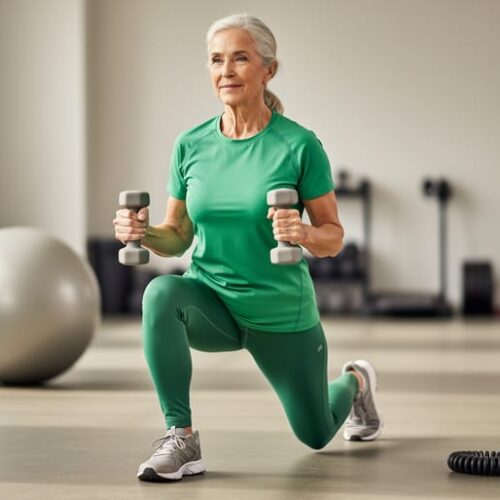

Four exercises cover nearly everything older adults need to stay strong, steady, and independent: walking, strength training with light weights or resistance bands, tai chi and balance work, and gentle stretching or yoga. Together they support the heart, protect muscle and bone, lower the risk of falls, and keep joints moving comfortably. Most can be started at home in 10 to 20 minutes, with little or no equipment.
Why these four? Aging brings gradual changes: muscle thins, balance gets less reliable, and stiff joints make everyday tasks harder. Each exercise here answers one of those changes directly. Walking builds endurance and heart health. Strength work holds on to the muscle and bone that keep you upright. Tai chi trains the balance that helps prevent falls. Stretching keeps your body flexible and your mind calm.
There’s an inner side to this, too. Moving regularly is a form of self-care that steadies your mood, eases tension, and builds confidence in what your body can still do. That sense of capability is real healing, and it grows with every session.
Below, you’ll find how we chose these exercises, simple how-to guidance for each one, and an easy weekly routine to start with. Check with your doctor before beginning anything new, especially if you have a health condition. Then begin small, go at your own pace, and let consistency do the work.
How We Chose These Exercises for Longevity and Everyday Independence
We built this list by looking at what public health guidance for older adults tends to emphasize, rather than by testing each exercise ourselves. The four picks reflect general recommendations from health organizations, and each one had to meet a few simple standards:
- Joint-friendly and low impact, so movement feels gentle rather than jarring.
- Beginner-friendly, with an easy way to start at home or in your community.
- Adaptable to different fitness levels, from first-timers to seasoned movers.
- Little or no equipment needed.
- Linked to healthy aging in public health guidance on activity for older adults.
Together, the four exercises cover the fitness areas that matter most for longevity and everyday independence. Endurance is your body’s ability to keep going, supported by a healthy heart and lungs, and it helps with daily outings and steady energy. Strength means the muscle power that lets you stand up from a chair, climb stairs, and carry groceries. Balance is your ability to stay steady on your feet, which plays a big role in preventing falls. Flexibility is how freely your joints and muscles move, making reaching, bending, and turning feel easier.
Walking, light strength training, tai chi, and gentle stretching each lean toward one or more of these areas, so you build a well-rounded foundation without needing a gym membership or fancy gear.
1. Walking: The Easiest Way to Build Heart Health and Endurance
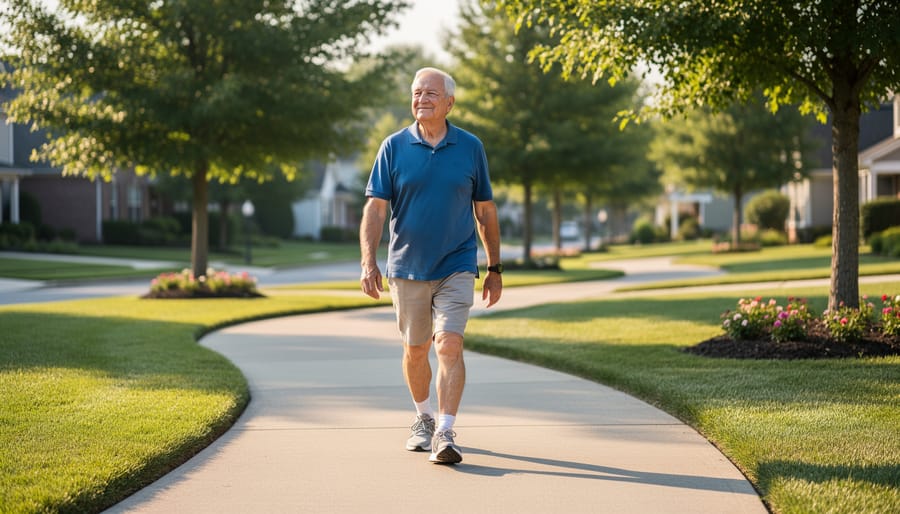
Walking is one of the gentlest and most accessible forms of cardio, which simply means activity that gets your heart and lungs working a little harder. You don’t need a gym membership or special equipment, just a pair of comfortable shoes and a bit of time.
Regular walking supports heart health, lifts your mood, and helps you feel more energetic through the day. Many people also notice they sleep better and feel steadier on their feet as walking becomes a habit.
Start small. A ten-minute stroll at a comfortable pace is a perfectly good beginning. If you can chat while you walk, you’re moving at about the right speed. Once that feels easy, add a few minutes every week or two. There’s no rush, and slow, steady progress is what lasts.
A few practical tips can make walking safer and more enjoyable:
– Choose supportive, well-fitting shoes with good grip and cushioning.
– Pick safe routes with even sidewalks, good lighting, and places to sit if you need a rest.
– Walk with a friend or neighbor. Company keeps you motivated and makes the time fly.
– On rainy, icy, or very hot days, try a mall or community track, where the surface is flat and the weather doesn’t matter.
Walking also gives your mind some room to breathe. Fresh air, a change of scenery, and quiet time to reflect can ease stress and nurture a sense of calm, a simple way to support your inner healing with every step.
2. Strength Training with Light Weights or Resistance Bands: Protect Muscle and Bones
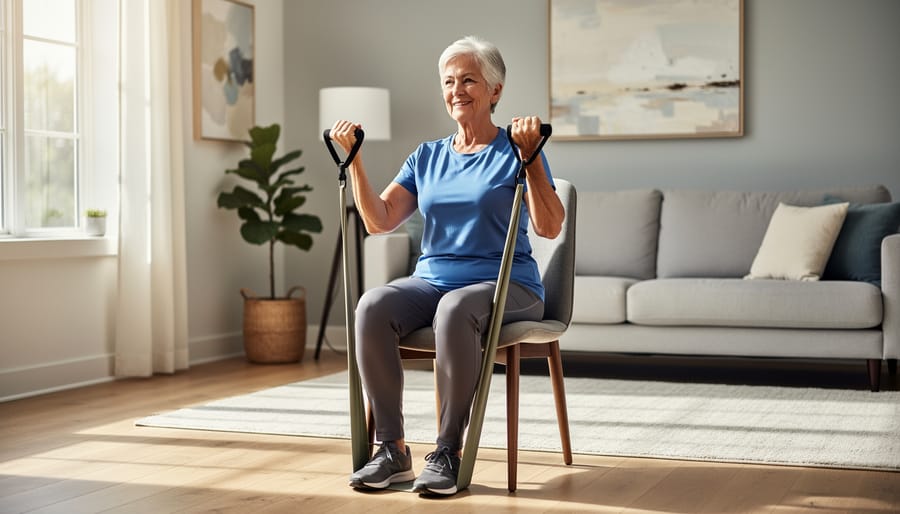
Muscle and bone strength gradually decline as we age. Adults tend to lose muscle mass year after year, and bones can become less dense. That’s a normal part of aging, but it’s not something you have to accept without a fight. Gentle resistance exercise gives your muscles and bones a reason to stay strong, which makes everyday tasks like climbing stairs, standing up from a chair, and carrying groceries feel easier.
You don’t need a gym membership to begin. Resistance bands are lightweight, inexpensive, and easy on the joints. Light dumbbells work well too, and so do two soup cans if that’s what you have in the kitchen. Pair your equipment with simple moves such as chair stands (sitting down and standing up slowly, without using your hands if you can) and wall push-ups (standing an arm’s length from a wall and gently pressing your body toward it and back).
Start lighter than you think you need to. Aim for slow, steady movements, taking a couple of seconds to lift and a couple to lower, rather than rushing through each repetition. Good form matters more than heavy weight. A small set of 8 to 10 repetitions is plenty at first.
Finally, give your body time to recover. Strength work two days a week, with a rest day between sessions, lets your muscles rebuild and grow stronger.
3. Tai Chi and Balance Exercises: Lower Your Risk of Falls
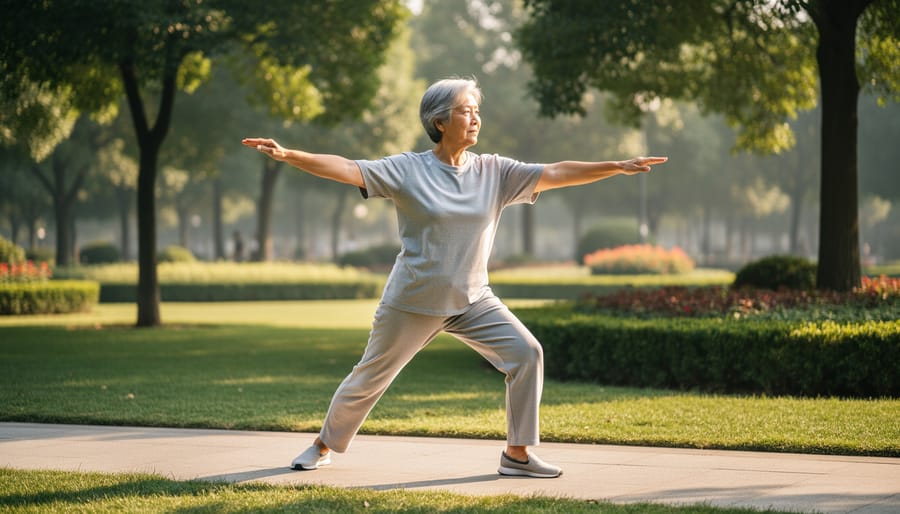
Balance is one of those things we rarely think about until it starts to slip. Yet staying steady on your feet is a big part of staying independent, whether that means walking to the mailbox, getting out of a chair, or stepping off a curb with confidence. Falls are a leading cause of injury in older adults, and building balance is one of the most practical ways to lower that risk.
Tai chi is a good place to begin. It’s a gentle practice of slow, flowing movements, where you shift your weight from one leg to the other while breathing evenly. Because the pace is unhurried, your muscles, joints, and mind all get time to work together. Many people also find it surprisingly calming. Focusing on each movement and each breath can quiet a busy mind, which is a quiet kind of healing in its own right.
You can pair tai chi with a few simple balance exercises at home:
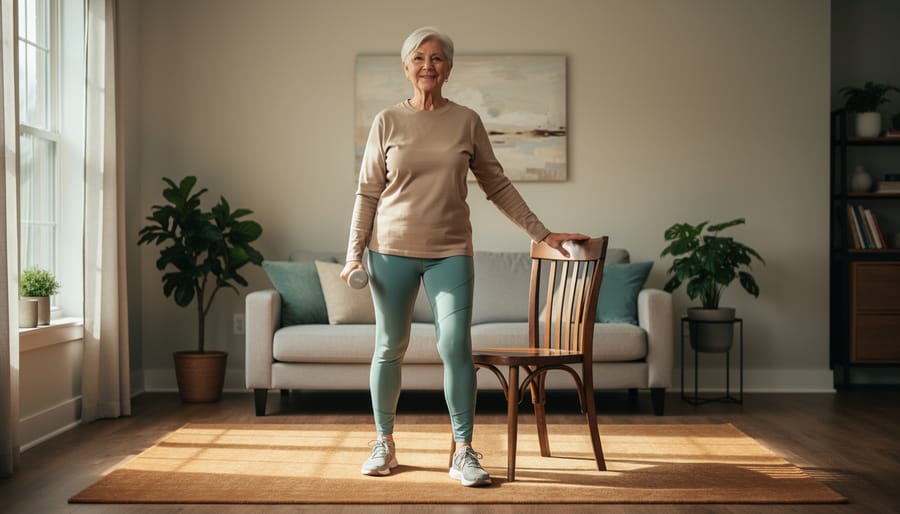
– Stand on one foot: Hold the back of a chair or the kitchen counter, lift one foot slightly, and hold for a few seconds. Switch sides.
– Heel-to-toe walk: Place one foot directly in front of the other, as if walking a straight line, with a wall or counter nearby for support.
Start with a few repetitions and add time as you feel steadier. Always keep something sturdy within reach.
To get started, look for beginner tai chi classes at community centers, senior centers, or local health programs. Many also offer free or low-cost sessions. Beginner videos online are another easy option, so you can practice at your own pace, in your own living room.
4. Gentle Stretching and Yoga: Keep Your Body Flexible and Relaxed
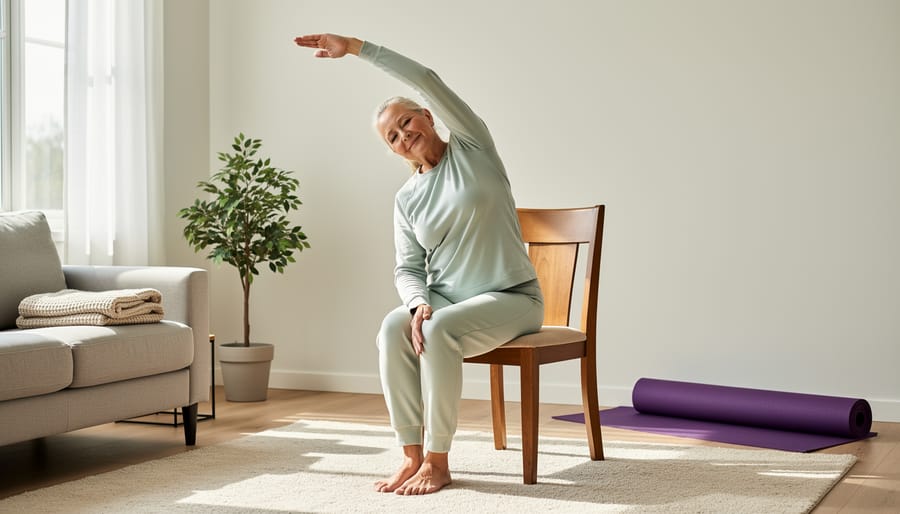
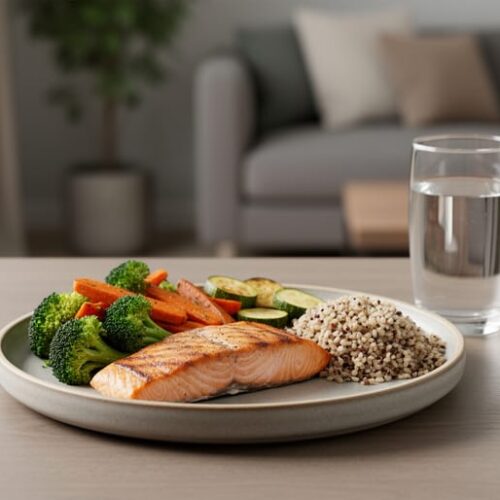
Stiffness tends to creep in quietly, and regular stretching is one of the kindest ways to push back. Gentle stretching or chair yoga can ease tight joints, make everyday movements like reaching or bending feel smoother, and give your body a chance to unwind. Pair it with a balanced diet, including the health benefits of produce and you’re supporting your body from both directions.
Here are a few simple stretches to try, ideally after a short walk when your muscles are warm:
– Neck: Sit tall and slowly tilt one ear toward your shoulder. Hold, then switch sides.
– Shoulders: Roll them gently backward in small circles, or reach one arm across your chest.
– Hamstrings: Sit near the edge of a sturdy chair, extend one leg with the heel on the floor, and lean forward from the hips until you feel a mild pull.
– Calves: Stand facing a wall, step one foot back, and press the heel down.
Hold each stretch for about 15 to 30 seconds, and never bounce. You should feel a gentle pull, never pain. If something hurts, ease off.
Breathing is the quiet secret here. Breathe in slowly through your nose, then let a long exhale soften each stretch. That steady rhythm tells your nervous system it’s safe to relax, which can melt away stress and leave you feeling calmer, a small but real step toward inner healing.
Putting It All Together: A Simple Weekly Routine to Get Started
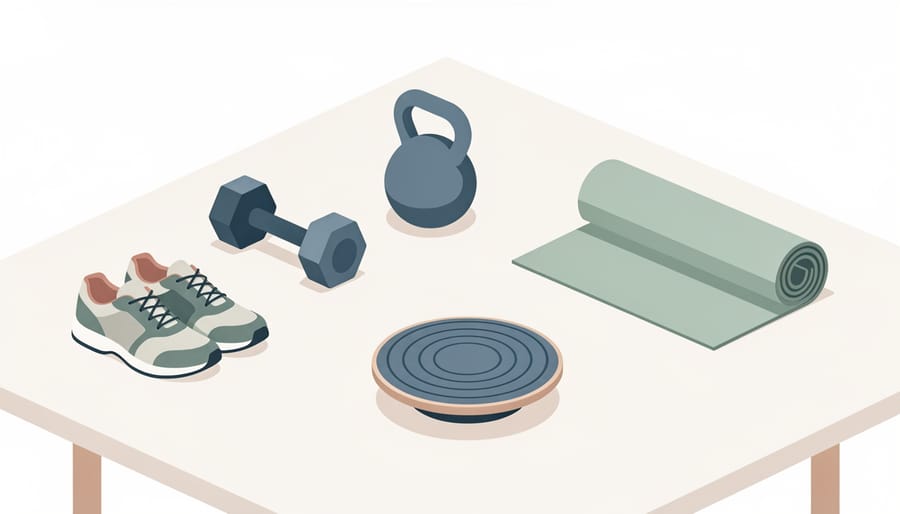
A good week doesn’t need to be complicated. Public health guidance for older adults generally points to about 150 minutes of moderate activity weekly, plus muscle-strengthening and balance work on a few days. Think of that as a target to grow toward, not a test to pass on day one.
Here’s one realistic way to spread it out:
– Walking: 10 to 20 minutes on three or four days.
– Strength work: bands or light weights on two non-consecutive days, with rest in between.
– Tai chi or balance practice: two or three short sessions.
– Stretching: a few easy minutes after walks or before bed.
If you’re building a routine to exercise for longevity, exercise for longevity works best when it fits your real life, so adjust the days to suit you.
A few habits make it stick. Start smaller than you think you need to. Put movement on the calendar like a doctor’s appointment. Jot down what you did, even just a tick on the fridge calendar, and celebrate every completed week. Some days your body will ask for rest, and that’s fine.
Exercise also works better with good support behind it. Drink water regularly, eat balanced meals with enough protein, and protect your sleep so your muscles and mind can recover.
Common Questions About Exercise for Seniors
Is it safe to start exercising after 65 or 70?
For most people, yes, and it’s never too late to begin. Start gently and check with your doctor first, so you can add healthy years with confidence.
How often should I exercise?
Aim for short, regular sessions most days, mixing walking, strength, balance, and stretching. Rest days are welcome too.
What if I have arthritis, a health condition, or use a cane or walker?
Gentle movement can often be adapted, including seated or supported versions. A doctor or physiotherapist can tailor it to you.
How do I stay motivated?
Walk with a friend, schedule movement like an appointment, and celebrate small wins. Eating well helps too, since colourful produce can fuel your workouts.
Whatever questions come up, a quick chat with your doctor or physiotherapist is the best way to get advice that fits your body.
Final Takeaway: Small Steps Today Support a Longer, Stronger Life
Walking builds your heart and endurance, strength work protects muscle and bone, balance practice like tai chi helps prevent falls, and gentle stretching keeps you flexible. Each one supports a longer, more independent life in its own way.
You don’t need to do everything at once. Every small step counts, and each one also nurtures your mood, confidence, and sense of calm. This week, pick just one exercise and give it a try. Your body will thank you, one gentle movement at a time.