

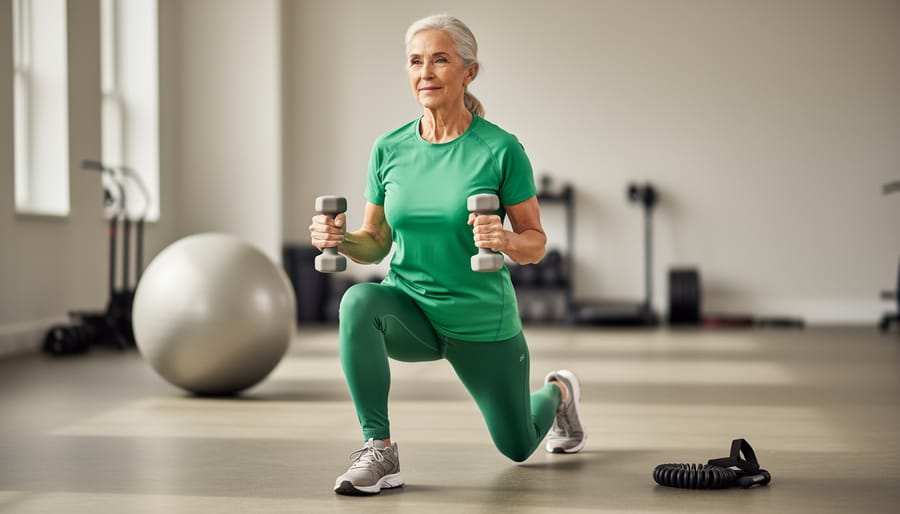
Living longer and healthier isn’t about luck or genetics alone. Exercise stands as one of the most powerful interventions we have to extend both lifespan and healthspan, the years you live free from chronic disease and disability. The right combination of cardiovascular training, strength work, mobility practice, balance exercises, and high-intensity intervals can add years to your life while dramatically improving the quality of those years.
The science is clear: regular physical activity reduces your risk of heart disease, stroke, type 2 diabetes, certain cancers, and cognitive decline. But not all exercise delivers equal longevity benefits. Research shows that specific types of movement, performed at particular intensities and frequencies, create the metabolic and cellular changes that slow biological aging. You need a structured approach that addresses cardiovascular fitness, muscular strength, flexibility, and balance, not just one or two of these pillars.
This guide walks you through building a complete longevity-focused exercise routine. You’ll learn which exercises deliver the greatest lifespan extension, how to combine them into a weekly schedule, what safety measures matter most as you age, and how to track your progress using meaningful biomarkers. Whether you’re starting from sedentary habits or already active, you’ll find practical steps to optimize your movement practice for the long game.
Your body has remarkable capacity for adaptation at any age. The key lies in consistent, intelligent training that builds resilience without breaking you down. Let’s build that framework together.
What You Need to Start Your Longevity Exercise Program
Starting an exercise program for longevity doesn’t require a home gym or expensive equipment. The beauty of longevity-focused exercise is its accessibility, you can begin today with items you likely already own, then expand your toolkit as you progress.
The essentials are minimal and affordable:
- Supportive athletic shoes that fit well and cushion your feet during walking or other cardio
- Comfortable, breathable clothing that allows full range of motion
- A basic timer or stopwatch (your phone works perfectly)
- A water bottle to stay hydrated during and after exercise
- Resistance bands or a set of light dumbbells (5-15 pounds to start) for strength work
Beyond these basics, optional tools can help you monitor progress and stay motivated. A heart rate monitor or fitness tracker lets you gauge exercise intensity and recovery, ensuring you’re working in the zones most beneficial for longevity. Many smartphones now include built-in step counters and activity tracking at no extra cost.
A yoga mat provides cushioning for floor exercises, stretching, and balance work, though a carpeted area or towel serves the same purpose. If you prefer structure, free online videos or low-cost apps can guide your sessions, but they’re not necessary, the exercises themselves matter more than production value.
Most longevity research focuses on bodyweight movements, walking, and moderate-intensity activities you can do anywhere. You don’t need a gym membership to add healthy years to your life. A safe space to move, whether that’s your living room, a local park, or a quiet street, is your most important resource. Start with what you have, and add equipment only when it genuinely supports your practice.
Important Safety Considerations Before You Begin
Starting a longevity-focused exercise program is one of the best decisions you can make for your health, but taking the right precautions ensures you build strength and vitality safely. The goal is to add healthy years, not create setbacks through preventable injuries or complications.
Your doctor can identify any limitations and may recommend specific modifications or a supervised start. This is especially important for cardiovascular exercise, which should be approached gradually if you have heart concerns. Just as you’d follow vaccination guidance to protect your health, getting medical clearance protects you from exercise-related risks.
Learn to recognize warning signs that mean you should stop immediately. Chest pain, severe shortness of breath, dizziness, or unusual joint pain aren’t normal parts of getting fit. Stop exercising and seek medical attention if you experience any of these symptoms. Mild muscle soreness is expected; sharp pain is not.
Injury prevention starts with proper form and gradual progression. Never increase intensity, duration, or weight by more than 10 percent per week. Warm up for five to ten minutes before each session with light movement and dynamic stretching. Cool down afterward with gentle stretching while your muscles are warm.
Modifications make longevity exercise accessible regardless of your starting point. If balance is a concern, perform exercises near a wall or sturdy chair for support. Joint issues? Choose low-impact options like swimming or cycling instead of running. Limited mobility? Chair-based exercises and resistance bands deliver real benefits. The key is consistency at your level, not matching someone else’s routine.
Protect your long-term health in other ways too. Stay hydrated, avoid vaping and get adequate sleep for recovery. Listen to your body, respect rest days, and remember that sustainable progress beats pushing through pain every time.
The 5-Step Process to Build Your Longevity Exercise Routine
Step 1: Establish Your Baseline and Set Realistic Goals
Start your longevity exercise journey by honestly assessing where you stand right now. This baseline gives you a clear starting point and prevents you from doing too much too soon, which often leads to injury or burnout.
Begin with three simple self-assessments you can do at home. First, time how long it takes you to walk a quarter mile or note how many steps you can comfortably take in six minutes. Second, see how many times you can stand up from a chair and sit back down in 30 seconds without using your hands. Third, stand on one foot with your eyes open and time how long you can maintain balance before needing to put your other foot down.
Write down these numbers. They’re not about judgment, they’re your personal markers for measuring progress over time.
Next, identify any physical limitations. Do you have joint pain, balance issues, or cardiovascular concerns? These don’t disqualify you from exercising for longevity, they just shape how you’ll start and progress.
Set goals that focus on function rather than appearance. Instead of targeting a specific weight, aim to improve your chair stand count by three repetitions in eight weeks, or add five minutes to your comfortable walking time. Research shows that functional improvements like these correlate directly with longevity benefits and reduced mortality risk.
Step 2: Include Cardiovascular Exercise for Heart Health
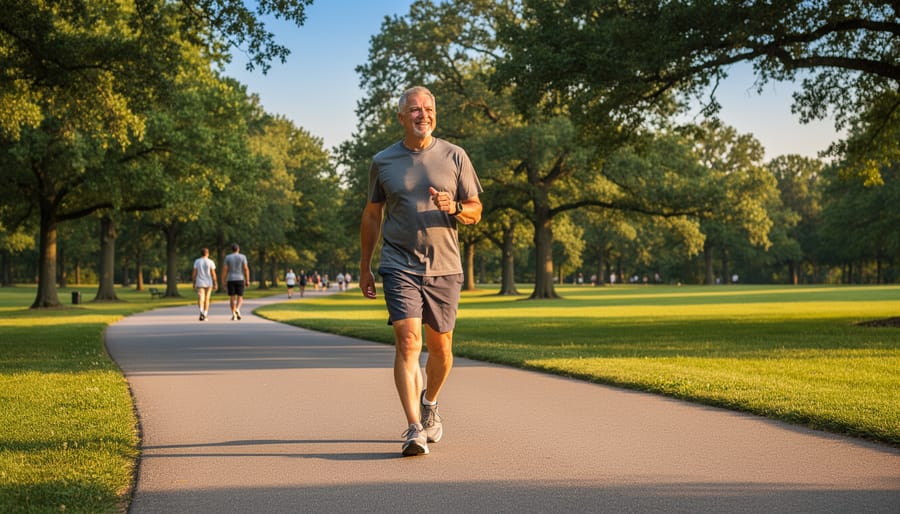
Cardiovascular exercise forms the cornerstone of any longevity-focused fitness program because it directly strengthens your heart, improves circulation, and reduces your risk of the chronic diseases that shorten lifespan. Research on dose response physical activity shows that even moderate amounts of aerobic exercise produce measurable longevity benefits, with returns continuing as you increase duration and intensity up to a point.
Aim for 150 minutes of moderate-intensity cardio each week, spread across at least three sessions. Moderate intensity means you can talk but not sing comfortably during the activity, your breathing is elevated but controlled. Walking at a brisk pace, cycling on flat terrain, or swimming laps all qualify. If you prefer higher intensity, 75 minutes per week delivers similar benefits; this includes jogging, fast cycling, or any activity that makes conversation difficult.
Choose activities you genuinely enjoy because consistency matters more than perfection. If you hate running, don’t force it, a daily 30-minute walk you’ll actually do beats a punishing routine you’ll abandon in three weeks. Mix different cardio types throughout the week to engage various muscle groups and prevent boredom. Monday might be a neighborhood walk, Wednesday a bike ride, Friday a swim.
Track your heart rate occasionally to ensure you’re working hard enough: multiply your age by 0.7 and subtract from 220 for a rough moderate-intensity target. But perceived exertion works fine too, if you feel like you’re working at a six out of ten effort, you’re likely in the right zone.
Step 3: Add Strength Training to Preserve Muscle Mass
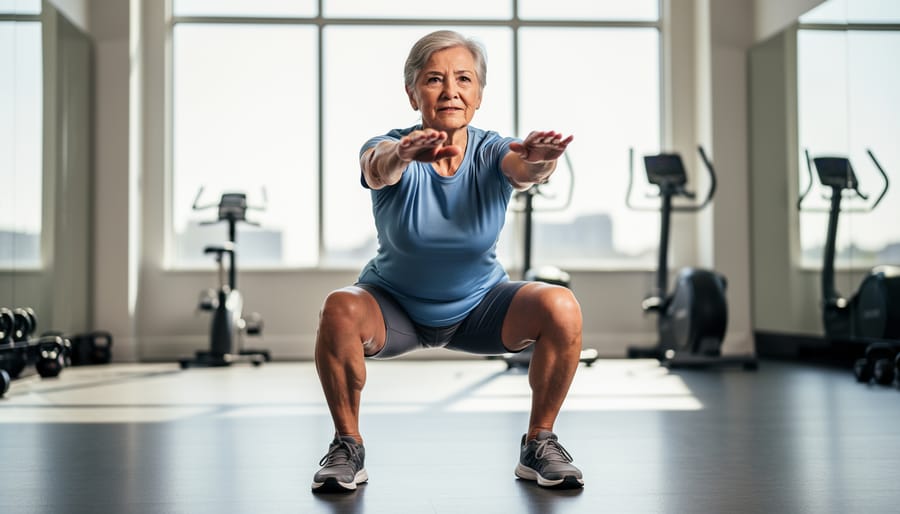
Strength training becomes non-negotiable after age 30, when you naturally lose 3-8% of muscle mass per decade without intervention. This decline accelerates after 60, leading to frailty, metabolic slowdown, and loss of independence. Resistance training reverses this trajectory.
You need just two sessions per week to preserve muscle and maintain metabolic health. Research on exercise for sarcopenia confirms this frequency prevents age-related muscle loss when done consistently. Each session should target major muscle groups: legs, back, chest, shoulders, and core.
Start with bodyweight exercises if you’re new to strength work. Squats, push-ups (wall or floor versions), lunges, and planks build foundational strength. Progress by adding resistance bands or light dumbbells when bodyweight becomes easy. Aim for 8-12 repetitions per exercise, completing 2-3 sets.
The key isn’t lifting heavy weights immediately, it’s progressive overload. Add one extra repetition, a slightly heavier weight, or an additional set every few weeks. Your muscles adapt when challenged slightly beyond their current capacity.
Compound movements deliver the biggest longevity payoff because they work multiple muscle groups simultaneously. Squats strengthen legs and core. Rows build back and arm strength. These functional patterns mirror real-life movements, keeping you capable of carrying groceries, climbing stairs, and maintaining independence decades from now.
Step 4: Incorporate Flexibility and Balance Work
Step four tackles flexibility and balance, components often overlooked, yet critical for maintaining independence as you age. Falls are a leading cause of injury in older adults, and stiff joints limit daily function. Adding just 10-15 minutes of targeted flexibility and balance work three to four times per week significantly reduces these risks.
Start with simple static stretches after your cardio or strength sessions, when muscles are warm. Hold each stretch for 20-30 seconds without bouncing: hamstrings, hip flexors, calves, shoulders, and chest. Focus on areas that feel tight or restrict your movement.
For balance, practice single-leg stands while brushing your teeth or waiting for coffee. Begin by holding a counter for support, then progress to hands-free. Heel-to-toe walking down a hallway and standing on one foot with eyes closed further challenge your stability. Research confirms that balance training reduces fall risk by improving proprioception and reaction time.
Yoga and tai chi offer structured approaches combining flexibility, balance, and mindful movement. A beginner yoga class or 20-minute online session builds strength and range of motion simultaneously. Tai chi’s slow, controlled movements are particularly effective for older adults.
The key is consistency, not perfection. Even five minutes daily improves mobility and confidence over time.
Step 5: Create a Sustainable Weekly Schedule
The most effective longevity exercise program is the one you’ll actually follow. Your weekly schedule should balance all essential exercise types, cardio, strength, flexibility, and balance, while accounting for your real-world time constraints and recovery needs.
Start by mapping your available time slots. Most people succeed with three to five dedicated exercise sessions per week, ranging from 20 to 60 minutes each. Schedule these appointments with yourself and treat them as non-negotiable commitments to your health.
A balanced beginner schedule might include: Monday and Thursday for 20-minute strength sessions, Tuesday and Saturday for 30-minute cardio walks, and Friday for 15 minutes of stretching. This provides two strength workouts, two cardio sessions, and one flexibility practice with built-in rest days.
Intermediate exercisers can add volume: Monday strength and cardio combo (45 minutes), Wednesday strength focus (30 minutes), Friday cardio intervals (30 minutes), and Sunday flexibility plus balance work (20 minutes).
Time-constrained individuals can combine elements. A 30-minute session might include 15 minutes of brisk walking followed by 10 minutes of bodyweight strength exercises and 5 minutes of stretching. This checks multiple boxes efficiently.
Whatever schedule you choose, consistency trumps intensity. Three moderate sessions you complete weekly outperform five ambitious sessions you skip. Build your routine around what you can sustain month after month.
How to Track Progress and Know It’s Working
Tracking your progress ensures you’re building genuine longevity benefits rather than just going through the motions. Objective measurements provide concrete evidence, while subjective improvements reveal how exercise transforms your daily function and well-being.
Start with resting heart rate, one of the most reliable longevity markers. Measure it first thing in the morning before getting out of bed. A decreasing resting heart rate over weeks or months signals improved cardiovascular efficiency. Most people see a drop of 5-10 beats per minute within three months of consistent aerobic exercise.
Strength benchmarks matter equally for longevity tracking. Test how many bodyweight squats you can perform with proper form, or measure grip strength if you have access to a dynamometer. Retest monthly. Maintaining or increasing these numbers as you age demonstrates that you’re preserving muscle mass and functional capacity, both critical for extended healthspan.
Functional fitness tests reveal real-world improvements. Can you get up from the floor without using your hands? How long can you balance on one leg with eyes closed? These practical measures directly correlate with fall prevention and independence in later years.
- Resting heart rate decreases by 5-10 beats per minute
- Strength tests show maintained or improved performance
- Recovery time between workouts shortens
- Functional movements feel easier in daily life
- Energy levels remain stable throughout the day
Subjective indicators deserve equal attention. Notice improvements in sleep quality, mood stability, and sustained energy. When your exercise routine supports rather than depletes you, and you’re also fueling your body properly with whole foods like fruits and vegetables you’re on the right track.
Adjust your program when progress stalls for four weeks or when exercises feel significantly easier. Increase intensity by 5-10% at a time, whether that means adding weight, extending duration, or reducing rest periods. Sustainable progression, not dramatic jumps, builds lasting longevity benefits.
Common Mistakes That Undermine Longevity Benefits
The biggest mistake people make is doing too much, too soon. Overtraining without adequate recovery time triggers chronic inflammation and increases injury risk, directly counteracting the longevity benefits you’re working toward. Your body needs rest days to repair tissue and adapt to training stress. Aim for at least one to two full recovery days each week, and don’t push through persistent pain or fatigue.
Another common pitfall is neglecting exercise variety. Many people stick to only cardio or only strength training, but longevity requires both, plus flexibility and balance work. Relying on a single exercise type leaves critical fitness components underdeveloped and increases your risk of functional decline as you age. Build a balanced program that rotates through all the components covered in the five-step process above.
Inconsistent practice undermines results more than any other factor. Sporadic exercise, three weeks on, two weeks off, prevents your body from building the metabolic and cardiovascular adaptations that protect against age-related disease. If your schedule feels overwhelming, scale back to a simpler routine you can actually maintain rather than abandoning the practice entirely.
Finally, many people ignore the foundational role of nutrition support and sleep in their longevity strategy. Exercise alone can’t overcome a poor diet or chronic sleep deprivation. These three pillars work together, so address all of them for genuine progress.
Frequently Asked Questions About Exercise and Longevity
How much exercise do I actually need for longevity benefits?
Research shows significant longevity gains from just 150 minutes of moderate aerobic activity weekly, combined with two strength sessions. More can help, but consistency at this baseline level delivers substantial health improvements.
Is it ever too late to start exercising for longevity?
No. Studies demonstrate that people who begin regular exercise in their 60s, 70s, and even 80s still gain measurable longevity benefits and improved quality of life. Your body responds to movement at any age.
Does more exercise always mean a longer life?
Not necessarily. The relationship isn’t linear, moderate, consistent exercise provides the biggest longevity returns, while extreme endurance training can sometimes stress the body. Balance and recovery matter as much as volume.
How does exercise compare to diet or other longevity interventions?
Exercise stands alongside nutrition as one of the two most powerful lifestyle factors for longevity. While supplements and medications have their place, nothing matches the comprehensive benefits of regular physical activity combined with healthy eating.
What if I can only manage 10-15 minutes a day?
Start there. Short sessions add up, and even brief daily movement beats long workouts done sporadically. Build from what’s sustainable rather than attempting ambitious schedules that collapse within weeks.
Can I maintain longevity benefits with just walking?
Walking provides excellent cardiovascular benefits, but you’ll miss critical longevity factors without adding strength and flexibility work. A complete program doesn’t require a gym, but it does need variety across all movement types.
These questions reflect what most people wonder when they’re deciding whether to commit to exercise for longevity. The answers cut through the noise: you don’t need heroic effort, and you’re not too old or too busy to start. If you’re struggling with motivation or need help building sustainable habits around movement and health, don’t hesitate to get support from healthcare professionals or wellness coaches. The key is taking that first step, then the next one, building a practice that fits your real life rather than an idealized version of it.
You now have everything you need to add years of vibrant health to your life. The science is clear: regular exercise combining cardiovascular work, strength training, and flexibility practice delivers measurable longevity benefits. What matters most isn’t perfection or intensity, it’s consistency and balance.
Start where you are, not where you think you should be. If you haven’t exercised in years, a 10-minute walk three times this week is a victory worth celebrating. That first step matters more than any elaborate plan you’ll abandon by next month. The transformation happens through small, repeated actions that compound over time.
Exercise for longevity isn’t about punishing workouts or chasing extreme fitness goals. It’s about movement that supports your body’s natural healing capacity and builds the physical resilience to enjoy life fully as you age. Whether you’re 35 or 75, your body responds to consistent, appropriate exercise with increased strength, better balance, improved cardiovascular health, and enhanced metabolic function.
The journey ahead isn’t linear. Some weeks you’ll feel strong and motivated; others will test your commitment. That’s normal. What distinguishes those who succeed is showing up even on the hard days, adjusting when needed, and trusting the process. Your future self, active, independent, and thriving, is counting on the choices you make today. Choose movement. Choose consistency. Choose the life you want to live for decades to come.